MHEV, HEV, PHEV or EREV? A Guide to Hybrid Cars | Yitongda
- Share
- Issue Time
- Nov 26,2026
Summary
Not all hybrid cars work the same way. Explore how MHEV, HEV, PHEV and EREV technologies work, compare their key differences, and discover which hybrid solutions may suit your target market.
Choosing the right hybrid vehicle is not just about fuel efficiency. Some buyers want lower running costs without relying on charging stations, while others prefer longer electric driving range or greater flexibility for long-distance travel.
Although MHEV, HEV, PHEV and EREV vehicles all combine electric power with another energy source, their powertrain designs and charging requirements are quite different.
1. Mild Hybrid (MHEV)
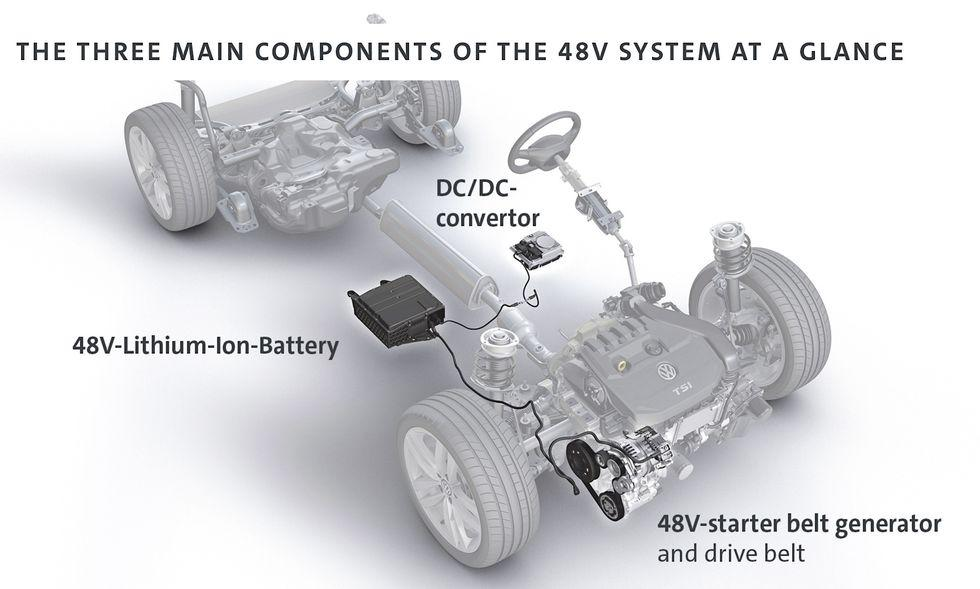
A Mild Hybrid Electric Vehicle (MHEV) combines a conventional petrol or diesel engine with a small electric motor and battery system. Many models use a 48V electrical architecture, although configurations vary between manufacturers.
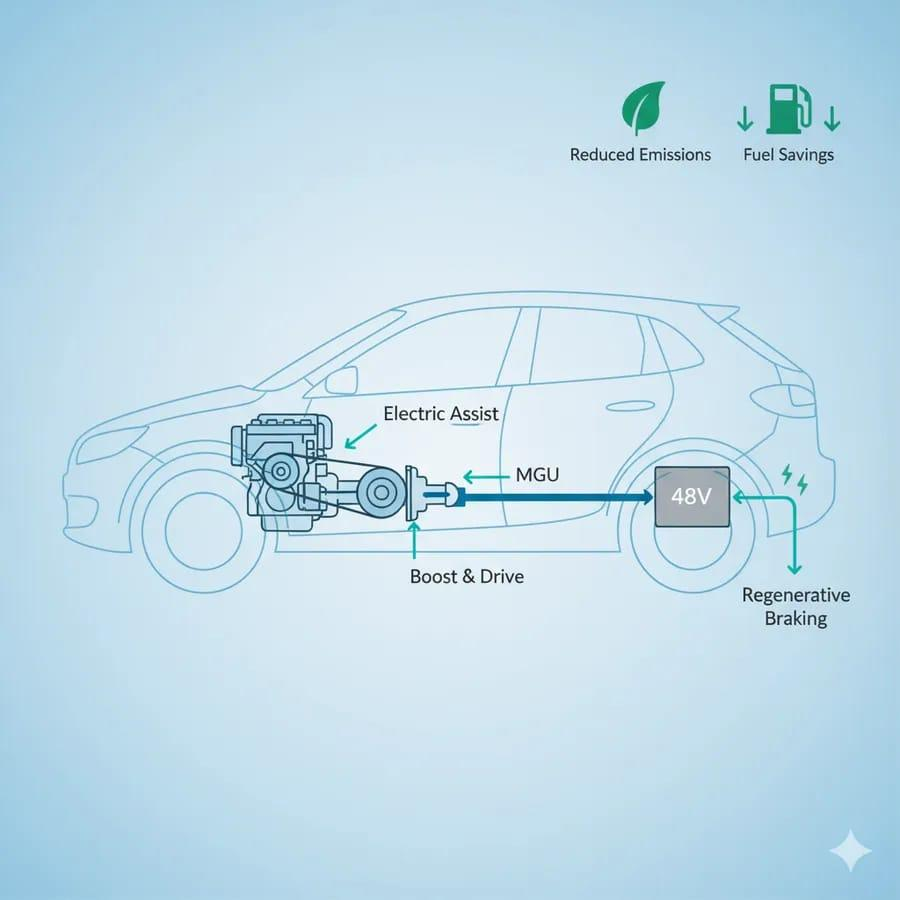
Unlike a full hybrid, an MHEV's electric motor mainly assists the combustion engine rather than independently powering the vehicle.
How does MHEV work?
>>Starting and acceleration: The electric motor provides additional torque to assist the engine, helping improve acceleration and reduce engine workload.
>>Stop-start operation: The system can automatically switch off the engine when the vehicle stops and restart it when needed.
>>Regenerative braking: During deceleration, the motor works as a generator, recovering some kinetic energy and storing it in the battery.
>>Battery charging: The battery is recharged through energy recovery and the vehicle's electrical system, so external charging is generally unnecessary.
Key Advantages
• Improved fuel efficiency compared with some conventional petrol or diesel vehicles.
• No need for external charging infrastructure.
• Familiar driving and refuelling experience.
• Relatively simple transition from conventional engine technology.
Limitations
The electric motor provides assistance rather than serving as the main driving source. Most MHEVs cannot drive independently on electric power for meaningful distances.
Suitable For: Buyers who want some fuel-efficiency improvements without changing their usual refuelling habits or depending on charging stations.
2. Full Hybrid (HEV)
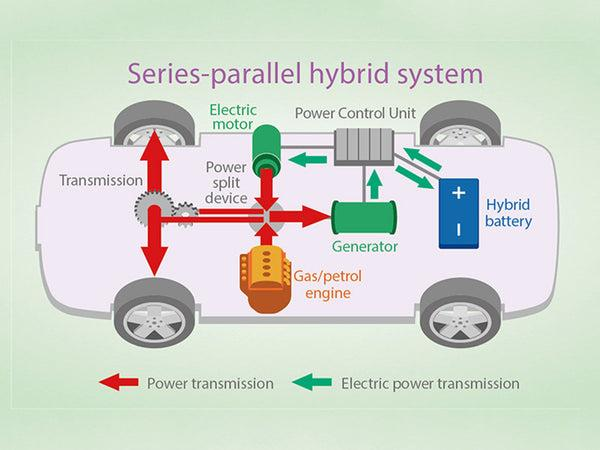
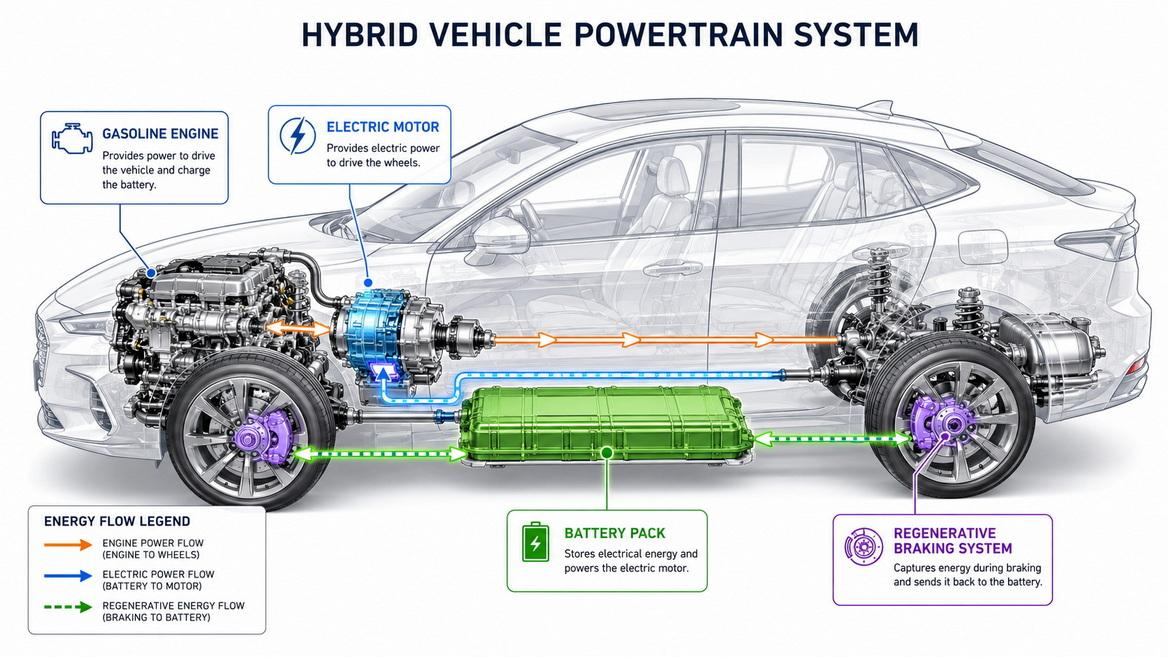
A Full Hybrid Electric Vehicle (HEV) combines a petrol engine, an electric motor and a hybrid battery. Unlike a mild hybrid, an HEV can use electric power alone to drive the vehicle under certain conditions.
The battery is normally charged through the engine and regenerative braking, meaning drivers do not need to plug the vehicle into an external charging point.
How does HEV work?
An HEV automatically adjusts how the engine and electric motor work together according to driving conditions.
>>Low-speed driving: The electric motor may power the vehicle independently when speed and power demand are suitable.
>>Normal driving: The petrol engine and electric motor can work together, or the engine can provide most of the driving power.
>>Acceleration: Both power sources may contribute to provide additional driving performance.
>>Deceleration and braking: The electric motor works as a generator, recovering energy and charging the hybrid battery.
The system manages energy automatically to improve efficiency under different driving conditions. Toyota's official explanation provides examples of how its hybrid system distributes power between the engine, motor and battery.
Key Advantages
• No external charging required.
• Efficient in many stop-and-go driving conditions.
• Electric motor assistance can reduce fuel consumption.
• Convenient for drivers who mainly rely on conventional fuel stations
Limitations
HEVs generally have smaller batteries than PHEVs and offer limited electric-only driving capability. They cannot normally provide the same extended electric driving range as plug-in hybrids.
Suitable For: Urban markets with frequent traffic congestion, where buyers want improved fuel efficiency but do not have convenient access to charging facilities.
3. Plug-in Hybrid (PHEV)
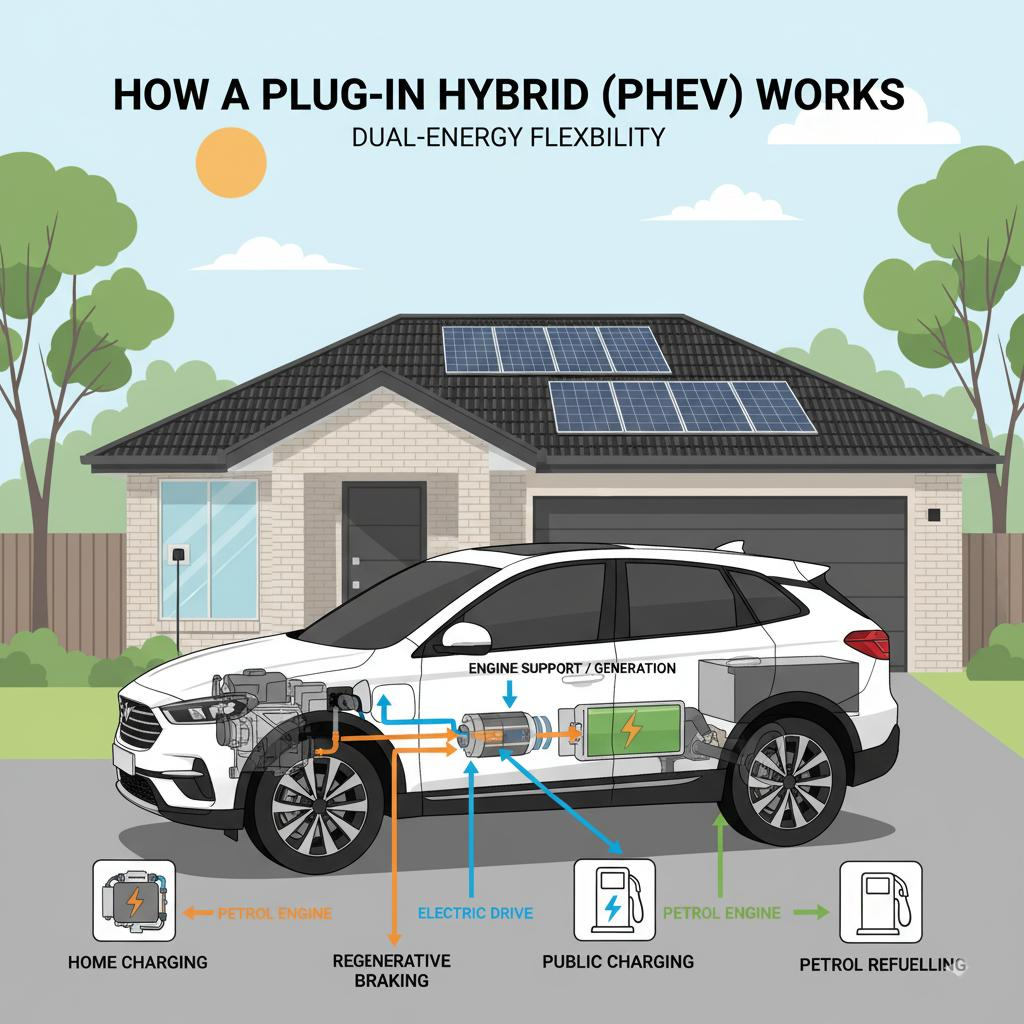
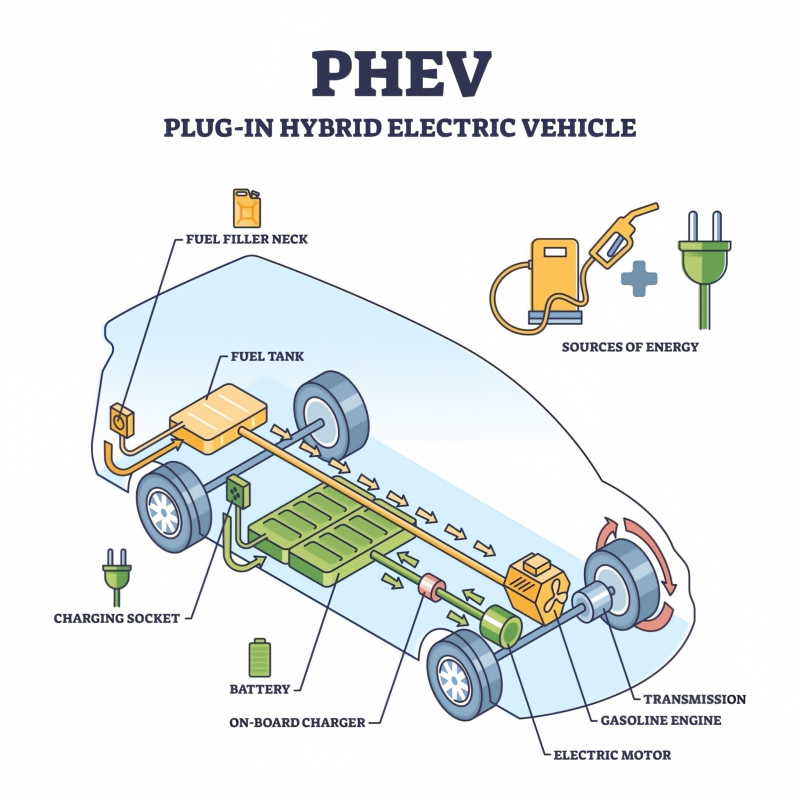
A Plug-in Hybrid Electric Vehicle (PHEV) combines a petrol engine, an electric motor and a larger battery than a conventional HEV. It supports external charging, allowing drivers to recharge the battery through home, workplace or public charging facilities.
Unlike conventional HEVs, PHEVs can generally travel a longer distance using electric power alone before switching to hybrid operation.
How does PHEV work?
>>Electric driving: When the battery has sufficient charge, the vehicle can use electric power for daily journeys.
>>Hybrid driving: When additional power is required or the battery charge becomes low, the petrol engine can work together with the electric motor.
>>Battery charging: The battery can be charged through an external power source and regenerative braking. Some systems can also use the engine to generate electricity.
For example, BYD's DM-i technology is designed around an electric-first plug-in hybrid approach, combining a Blade Battery, electric motor and petrol engine.
Key Advantages
• Longer electric driving range than most conventional HEVs.
• Can reduce petrol consumption when regularly charged.
• Petrol engine provides additional flexibility for long-distance journeys.
• Suitable for drivers who want both electric commuting and conventional refuelling options.
Limitations
PHEVs generally have higher purchase costs than comparable conventional vehicles due to their larger batteries and more complex powertrains. Their actual fuel economy also depends heavily on charging frequency and driving habits.
A PHEV that is rarely charged may not deliver the fuel savings buyers expect.
Suitable For: Markets where home or workplace charging is accessible, and buyers want electric driving for daily journeys without giving up petrol-powered long-distance flexibility.
4. Extended-Range Electric Vehicle (EREV)
A Box / Van Truck has a fully enclosed cargo compartment that protects goods from rain, dust, and direct sunlight.
Typical Applications:
>>E-commerce parcels and express deliveries
>>Furniture and household goods
>>Electronics and packaged products
>>Supermarket and retail distribution
It is a good option for businesses that need secure, weather-protected transportation, especially for urban and intercity deliveries.
5. What Should Buyers Consider?
Conclusion
Each cargo body serves a different purpose. Whether you need a Dropside / Flatbed, High-Sided, Box / Van, or Refrigerated Truck, the right choice depends on your cargo and operating requirements.
At Yitongda, we provide commercial vehicle sourcing and export services for overseas buyers. Contact us to explore suitable trucks for your business.