How to Choose the Right Commercial Vehicle for Your Business: A 5-Step Guide
- Share
- Issue Time
- Oct 23,2026
Summary
Choosing the right commercial vehicle involves more than comparing prices. This 5-step guide helps you evaluate cargo requirements, driving distance, operating costs, local regulations, and vehicle specifications to find a suitable vehicle for your business.
Choosing the right commercial vehicle is an important decision for any business involved in transportation, logistics, distribution, or cargo delivery. The right vehicle can help improve operational efficiency, manage transportation costs, and meet daily business requirements.
For overseas buyers sourcing commercial vehicles from China, it is important to look beyond the purchase price. Cargo requirements, daily driving distance, operating costs, local regulations, and vehicle specifications all play a role in choosing a suitable model.
Here are five key steps to help you make a more informed purchasing decision.
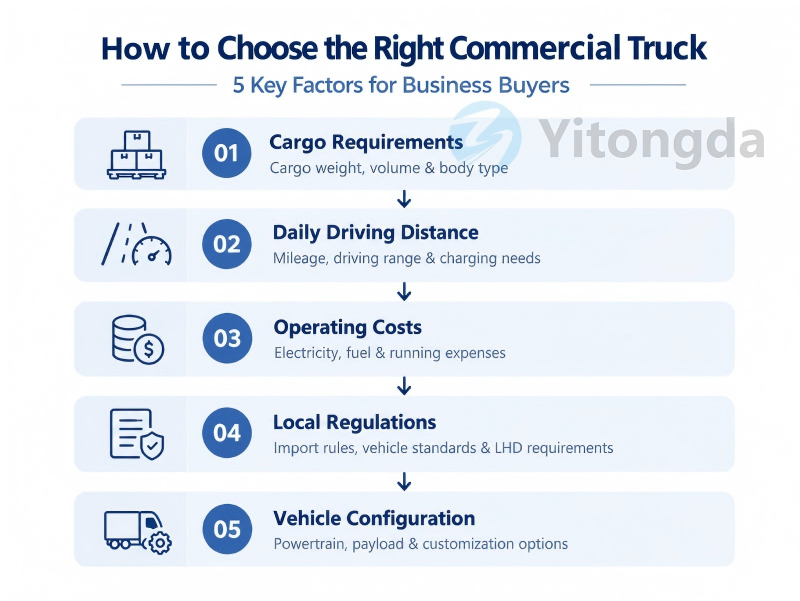
1. Evaluate Cargo Requirements
Start by identifying what you need to transport and how much cargo the vehicle must carry. Different businesses have different transportation requirements, so the vehicle's payload capacity, cargo space, and body configuration should match your actual workload.
Consider the following factors:
· Cargo Weight: Estimate the typical and maximum weight of the goods you transport. Check the vehicle's rated payload and ensure the planned load complies with applicable weight limits.
· Cargo Volume: Consider the dimensions and volume of your goods. Bulky cargo may require more cargo space even when its weight is relatively low.
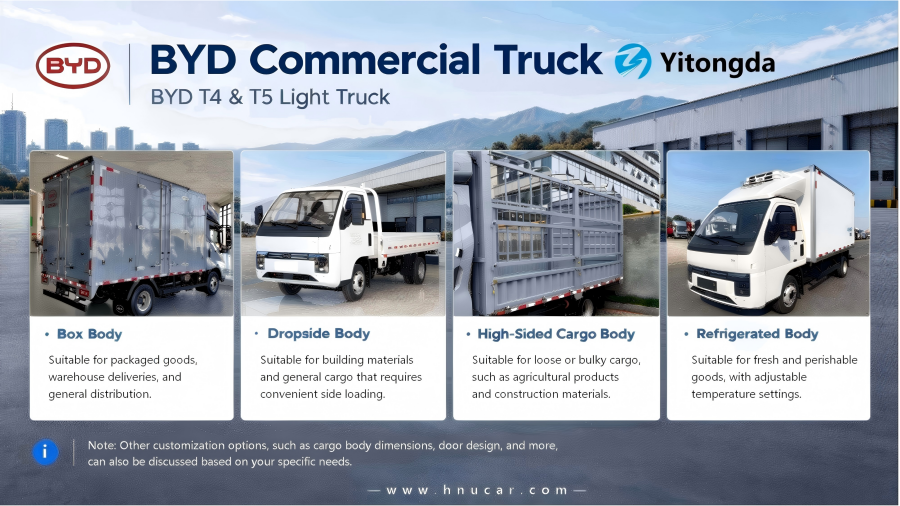
· Cargo Body Configuration: Box bodies are suitable for many packaged goods and distribution tasks, while dropside bodies can make side loading easier. Refrigerated bodies may be necessary for temperature-sensitive products.
· Loading and Unloading: Consider whether your business requires rear access, side access, specific door designs, or other loading arrangements.
For example, a warehouse distribution business may prioritize enclosed cargo space and convenient loading, while a construction materials supplier may need a vehicle with a suitable payload and an accessible cargo body.
The key is to choose a vehicle that matches your regular transportation tasks without paying for unnecessary capacity or compromising legal loading limits.
2. Consider Daily Driving Distance
Your daily routes and driving conditions help determine which commercial vehicle and powertrain are suitable for your business.
Before purchasing, estimate the distance the vehicle will travel each day and consider how frequently it will operate.
· Daily Mileage: Calculate the typical distance covered per shift, including return trips and additional deliveries.
· Driving Range: For electric commercial vehicles, compare the stated driving range with your actual route requirements. Real-world range can vary with cargo weight, driving conditions, weather, and accessory use.
· Charging Requirements: If you are considering an electric truck, check whether charging facilities are available at your depot or along your routes. Charging time should also fit your operating schedule.
· Road Conditions: Consider whether the vehicle will mainly operate on urban roads, highways, rural roads, or a combination of surfaces.
Electric commercial vehicles may suit businesses with predictable routes and convenient charging access. Diesel models may be worth considering for operations that require longer journeys or have limited charging infrastructure.
Choose a vehicle whose range, refueling or charging requirements, and operating conditions fit your daily schedule.
For example, explore the [BYD T4 electric light truck] to review an electric truck option for urban delivery and commercial cargo transport.
3. Compare Operating Costs
The purchase price is only one part of the total cost of operating a commercial vehicle. Energy consumption, maintenance, spare parts, and vehicle downtime can also affect your business expenses.
To compare different models, consider these factors:
· Purchase Price: Compare the prices of vehicles with similar specifications, configurations, and equipment.
· Fuel or Electricity Costs: Estimate energy expenses using local fuel or electricity prices, expected mileage, and the vehicle's actual consumption.
· Maintenance and Spare Parts: Check routine servicing requirements, spare parts availability, and access to qualified repair services in your market.
· Vehicle Utilization: Consider how frequently the vehicle will be used and how much transportation work it can complete during normal operating hours.
· Downtime: Unexpected repairs or charging delays can affect delivery schedules and business productivity.
For a practical comparison, estimate monthly or annual operating costs using your expected mileage and working days. Where possible, compare vehicles over the same operating period and under similar load and route conditions.
For example, an electric truck may offer lower energy costs under certain local conditions, but its overall cost advantage depends on electricity prices, charging efficiency, battery performance, and vehicle utilization. A diesel truck's costs will similarly depend on fuel prices, consumption, and maintenance requirements.
Compare the expected cost of using the vehicle, not just its initial purchase price. Actual operating costs will vary by model, market, and usage.
4. Check Local Regulations
Before placing an order, confirm that the vehicle meets the import, registration, and operating requirements of your destination market. A vehicle that suits your business technically may still be unsuitable if it does not meet local regulations.
Pay particular attention to the following:
· Import and Registration Requirements: Check vehicle eligibility, required documentation, applicable taxes, and registration procedures in your destination country.
· Left-Hand Drive Requirements: Confirm that the vehicle's steering configuration is suitable for your market. Yitongda focuses on left-hand-drive markets, but buyers should still verify local vehicle requirements.
· Vehicle Weight Limits: Check applicable gross vehicle weight, axle load, and road-use restrictions.
· Emission Standards: Verify the emission requirements applicable to the vehicle type, model year, and intended use.
· Vehicle Dimensions and Equipment: Confirm any relevant limits on vehicle length, width, height, lighting, safety equipment, and cargo body modifications.
Requirements can differ significantly between countries and may change over time. Do not assume that a vehicle approved for use in one market will automatically qualify for import or registration in another.
For overseas buyers sourcing vehicles from China, it is advisable to confirm the relevant requirements before finalizing the model and configuration. This can help reduce the risk of unexpected compliance issues, additional costs, or delivery delays.
5. Confirm Vehicle Specifications
Once you have identified a suitable vehicle type, review the exact specifications of the model you intend to purchase. Similar-looking vehicles can have different powertrains, payload ratings, battery capacities, and cargo body configurations.
You can also review the [BYD T5 commercial truck options] to compare available powertrain and configuration choices.
Before ordering, confirm the following details:
· Powertrain: Verify whether the vehicle is fully electric, diesel-powered, or available in another configuration that meets your needs.
· Battery Capacity and Driving Range: For electric models, check the specified battery capacity, stated driving range, and charging requirements.
· Payload and Gross Vehicle Weight: Confirm the rated payload and gross vehicle weight using the official specifications for the exact model.
· Cargo Body Dimensions: Check the cargo area's length, width, height, and loading access. If modifications are required, confirm the available options and their compatibility with the chassis.
· Model Year and Vehicle Condition: For used vehicles, verify the model year, actual condition, mileage, and available vehicle records. For new vehicles, confirm the production year and exact configuration.
· Export and Delivery Details: Confirm the vehicle specification sheet, included equipment, export documentation, and agreed delivery arrangements with the supplier.
If you require a customized cargo body, such as a box body, dropside body, refrigerated body, or another configuration, discuss the requirements with the supplier before ordering. The feasibility of each modification depends on the specific vehicle, chassis capacity, and applicable regulations.
If you are comparing electric commercial trucks for your business, read our guide to BYD T4 vs. T5: Which Commercial Truck Is Right for Your Business to learn more about the differences between these two models.
5. Source BYD Commercial Trucks from China with Yitongda
Choosing the right commercial vehicle starts with understanding your cargo requirements and daily routes.
By comparing operating costs, checking local regulations, and verifying the exact vehicle specifications, you can make a more informed purchasing decision.
If you are looking for commercial vehicles from China, Yitongda can help you explore available models and configurations based on your transportation needs and target market.
Contact Yitongda to discuss your requirements, check vehicle availability, and explore suitable commercial vehicle options for your business.