How to Avoid Scams When Buying Cars from China
- Share
- Issue Time
- Sep 10,2026
Summary
China is now the world's largest car exporter, and used vehicles, NEVs and construction machinery from China…
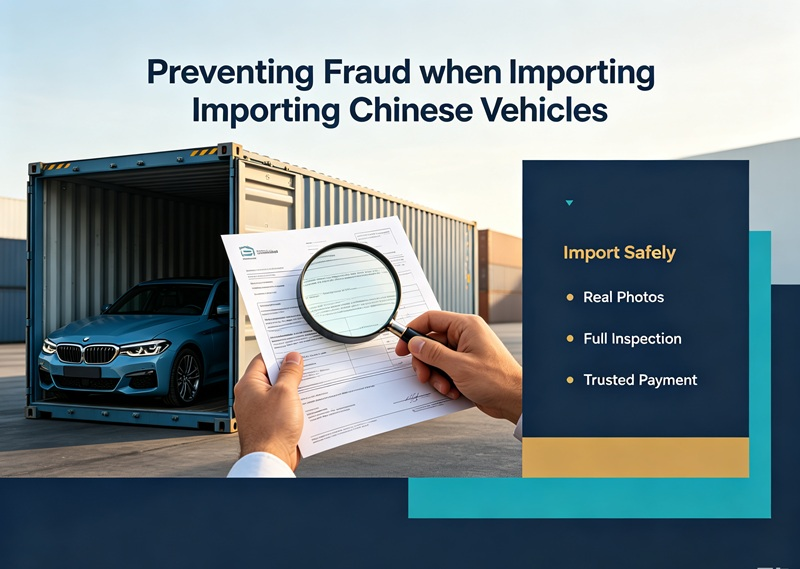
1. Reasons for being scammed when importing Chinese cars
The information gap. A vehicle's Chinese history is not visible on standard overseas vehicle-history databases.
The distance. You cannot stand next to the car. Scammers use stolen photos, refuse live video, and pressure you to pay "before the deal is gone."
The advance-payment trap. The single most common pattern: a request to wire a deposit to a personal account — then the seller disappears.
2. Verify authenticity using the following four methods
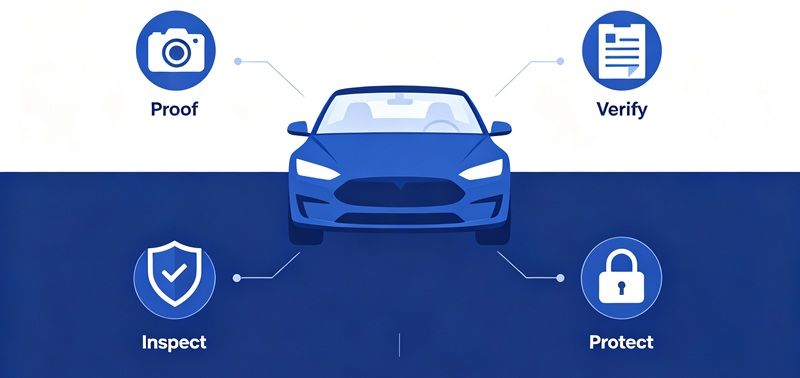
Before you sign a contract or transfer a dollar, run any supplier through this system. It answers the core question — how to verify a Chinese car exporter — and protects the vehicle itself.
2.1 Verify company legitimacy
Ask for a copy of the business license. Every legal Chinese company has a Unified Social Credit Code printed on it.
Confirm export authorization. Not every company can export used cars. Only enterprises on China's Ministry of Commerce (MOFCOM) used-car export pilot list have the legal right to export used vehicles directly.
Cross-check independently. The company's status can be verified on China's National Enterprise Credit Information Publicity System. If you cannot do this yourself, ask a trusted agent in China to confirm it for you.
Check for a real physical address, years in operation, and — a strong positive signal — an overseas warehouse or showroom you could actually visit.
2.2 Match the payment account
If they ask you to pay into a personal account, or a different company's account, stop immediately.
A legitimate exporter will always direct payment to its official corporate account, leaving a traceable record.
2.3 Verify the vehicle, not just the seller
Ask for a photo of the VIN plate on the actual car, then decode it to confirm year, model and plant match the listing.
Run a Chinese vehicle history report — not just a local one. Standard overseas checks show nothing for a car that spent its life in China. A China-specific report reveals accident records, insurance claims and mileage chronology from Chinese databases.
Insist on a real-time video call. A genuine seller will show you the live vehicle without hesitation.
2.4 Check document-chain consistency
The Shipper on the Bill of Lading, the Seller on the Commercial Invoice, and the beneficiary of your payment should all be the same entity. Also ask to see the export license for that specific vehicle before final payment — it proves the government has approved the shipment.
3. 7 things to check before you pay
This is your pre-payment checklist — the practical version of "how to check a used car before buying from China."
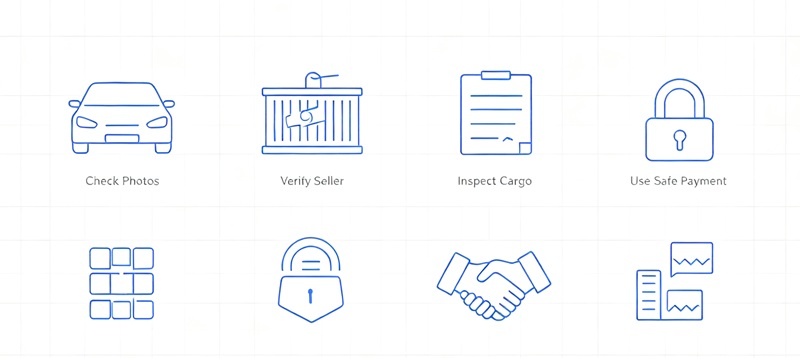
1.VIN matches the decode and all documents. A 17-character VIN encodes manufacturer, year and plant.
2.Chinese vehicle history report, not just a local one. If the report shows 45,000 km but the car now reads 30,000 km, the odometer has been rolled back.
3.Real photos + a 30–60 second walkaround video + live call. The odometer on the dashboard must match the listing.
4.Ownership & de-registration proof. The car must be legally transferred out of the Chinese owner's name (de-registration) before export.
5.Market compliance for YOUR country. Get this wrong and the car is seized at port.
6.Ensure transparency of landed costs. Require a written breakdown: vehicle price + refurbishment costs + export license fees + inspection fees + shipping costs, and an estimated tariff for your country/region.
7.Payment safety. Use T/T to a verified corporate account, a Letter of Credit (L/C) for bulk, or escrow for buyer protection.
Are you ready to import?
Send us the model, year, budget and destination country. We'll return a transparent landed-cost quote, a VIN-verified condition report, and a contract you can actually read. Questions about inspection, compliance or payment safety? Message us on WhatsApp.