Russians Queuing Up to Buy "Chinese Used Cars"?
- Share
- Issue Time
- Feb 10,2026
Summary
Russians Queuing Up to Buy "Chinese Used Cars"? Imports of Used Cars from China to Russia to Surge 3.5 Times in 2025, with Corolla, RAV4, and CR-V Being the Most Popular Models

Russians Queuing Up to Buy "Chinese Used Cars"? Imports of Used Cars from China to Russia to Surge 3.5 Times in 2025, with Corolla, RAV4, and CR-V Being the Most Popular Models
In 2025, Russia will import 81,200 used passenger cars older than three years from China, compared to only 23,500 in 2024, representing a year-on-year increase of approximately 3.5 times...
The Russian used car market is being unexpectedly ignited by "Chinese car sources." In 2025, Russia will import 81,200 used passenger cars older than three years from China, compared to only 23,500 in 2024, representing a year-on-year increase of approximately 3.5 times, breaking records in this sector.
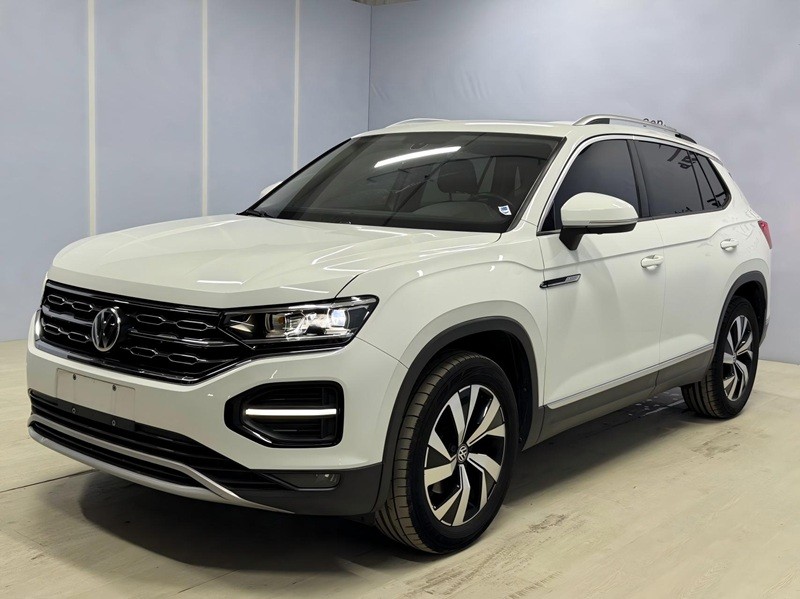
Russian media interprets this as a shift towards a more reliable source of used cars in China. This isn't because Russian consumers have suddenly become enamored with Chinese brands, but rather because it's easier to find familiar, globally-oriented models in China, often with newer condition and higher specifications. The Chinese market provides Russia with a large volume of vehicles, clearly defined models, and lower costs for buyers to understand, offering greater peace of mind regarding usage and maintenance.
In terms of brand structure, Japanese and German brands, trusted by Russian consumers, remain at the forefront. Statistics show that in 2025, Toyota will account for approximately 15,000 used cars entering Russia from China, representing about 18.5%; followed by Volkswagen (11,100), Honda (10,300), BMW (4,700), Audi (4,600), and Hyundai (3,900). Chinese brands are also beginning to gain a foothold: Geely approximately 3,400, Changan approximately 3,300; Kia (2,500) and Nissan (2,200).
Specifically, regarding vehicle models, 3,912 Toyota Corollas were imported throughout the year. Following closely were the Toyota RAV4 (3,476 units), Honda Breeze (2,269 units), BMW X3 (1,964 units), and Honda CR-V (1,941 units). Russians generally categorize these vehicles as typical choices due to their ease of repair, durability, and readily available parts, reflecting the pragmatic approach of the Russian used car market.
It's worth noting that these imported used cars from China are not "old." The report states that approximately 40% of the vehicles were manufactured in 2022, and about 45% in 2021, making them generally "nearly new." In terms of power, 56.4% of the vehicles have a power output exceeding 160 horsepower—a threshold that will become sensitive after December 2025 due to adjustments in the Russian recycling fee (commonly known as "scrapping tax/recycling fee") calculation rules. Importers are willing to bear the increased costs despite knowing them because the market demand for "more powerful and better-equipped" vehicles has not disappeared. Russian media also mentioned a surge in sales in December 2025 before the new tolling rules fully took effect, further boosting the annual figures.
For Chinese auto exporters, this trend of "buying used cars from China" has two effects: on the one hand, it diverts some of Russia's budget for new cars, especially mid-to-high-end SUVs; on the other hand, it indicates that China is becoming an important source of vehicles for the Russian market, and the trade chain is becoming more mature and professional. In the short term, parallel imports and used car businesses may continue to restructure around the "160-horsepower cost line."