Russia's Used Car Imports Reach Record High in 2025
- Share
- Issue Time
- Jan 20,2026
Summary
Russia's used car imports surpass 500,000 units in 2025, setting a new record: Chinese imports surge 3.5 times.

Japan remains the "base" of Russia's used car imports, while imports from South Korea nearly doubled (+99%); imports from China were equivalent to 3.5 times that of the same period last year...
Russia's used car imports reached a record high in 2025. A total of 493,800 used passenger cars were imported in 2025; if 8,500 light commercial vehicles (LCVs) under 3.5 tons are included, the total exceeds 500,000 units.
In terms of origin, Japan remains the "base" of Russia's used car imports. In 2025, 215,600 used cars were imported from Japan, accounting for nearly 44%, of which over 99% were right-hand drive vehicles. However, imports from Japan saw a slight year-on-year decline of 5%, while several new routes experienced explosive growth: imports from South Korea nearly doubled to 110,700 vehicles (+99%); China became the third largest source country, with imports reaching 81,200 vehicles, equivalent to 3.5 times that of the same period last year; imports via Georgia also rose to 36,700 vehicles, a significant year-on-year increase of 191%, demonstrating the further amplification of the role of "transshipment and transit" in the current trade environment.
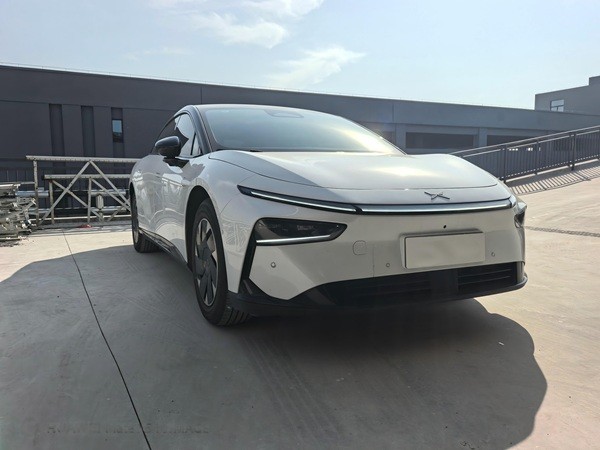
In terms of brand structure, Toyota and Honda continue to lead. Data shows that Toyota imports increased to 97,500 vehicles (+6%), and Honda imports increased to 78,300 vehicles (+12%). Following closely behind are BMW (46,000 units), KIA (36,500 units), Volkswagen (28,600 units), Mercedes-Benz (26,400 units), Hyundai (24,400 units), Audi (17,200 units), Nissan (16,100 units), and Mazda (14,300 units). Among the major brands, Hyundai (+71%) and Audi (+70%) saw the most significant growth; Nissan was the only brand in the top ten to experience a year-on-year decline (-20%).
More alarming for Chinese auto exporters is the fact that imported used cars in relatively new condition are being seen by the industry as alternatives to new cars, especially some newly launched Chinese brand models. Russian experts pointed out in a report that, given rising new car prices and increased scrapping/recycling costs, imported used cars are more likely to meet consumers' demand for "more powerful and better-equipped" vehicles. In 2025, models with engine power exceeding 160 horsepower accounted for 45.6% of imported used cars. However, changes to preferential import conditions starting December 1st will affect nearly half of this segment, indicating that policy benefits are tightening, but the market has already found a way forward through used car imports.
The record-high used car imports essentially reflect the continued strong sensitivity of Russian consumers to "cost-effectiveness and configuration," and also indicate that rising costs for new cars are changing purchasing decisions. For China's vehicle exports, this is not simply bad news: on the one hand, "new Japanese/Korean used cars" will directly squeeze the mid-to-high-configuration segment; on the other hand, with the gradual reduction of preferential conditions and increased uncertainty regarding the compliance and cost of imported used cars, Chinese brands, if they can solidify their advantages in warranty, financing, trade-in, and parts supply systems, have the opportunity to shift the competitive logic from "short-term price competition" to "long-term total cost of ownership competition."